How To Easily Turn Your Parrot Into A Friendly Pet
For ages, Parrots have been one of the few birds that can be tamed by humans at home. However, training a Parrot is not an easy job. But as a Parrot owner, you need to enjoy the task. All you have to do is follow some basic tips and methods, put in a little effort for around 15 to 20 minutes a day and that’s all!
Domesticating a Parrot is like bringing up a human baby. There is little difference between the two. Like any human baby, a pet Parrot also needs the same amount of care, love and attention, or perhaps even more.
Don't want our free course?
Check out our premium training product
Parrot Training Course - The Ultimate Guide
If your Parrot has become too noisy or disobedient or aggressive, our Parrot Training Course will teach you how to train it and stop it from screaming and biting.
Types of Parrots
There are as many as approximately 350 Parrot species and subspecies. The 9 most popular Parrot species are:
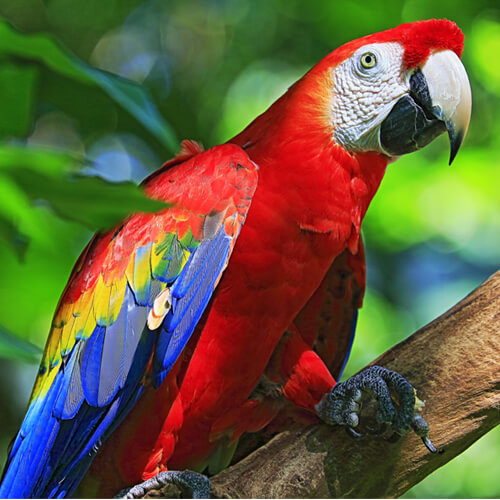
Macaw
The extremely beautiful Macaws are brilliantly colored members of the Psittacine family. Originating in the lush green canopied rainforests of Central and South America, the Macaws' vibrant colored plumage is a stunning sight against the green and the colorful fruits and flowers.
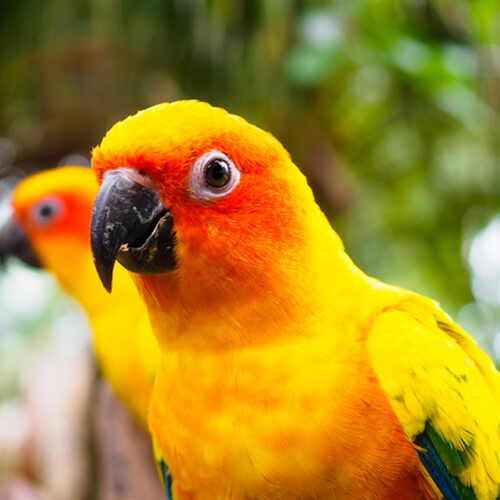
Conure
The Conures are medium-sized birds mainly found in Central and South America. Although affectionate little pets, these cone-tailed Psittacines can be extremely noisy at times. They come in different shades of gray, white, red and orange blended with green.
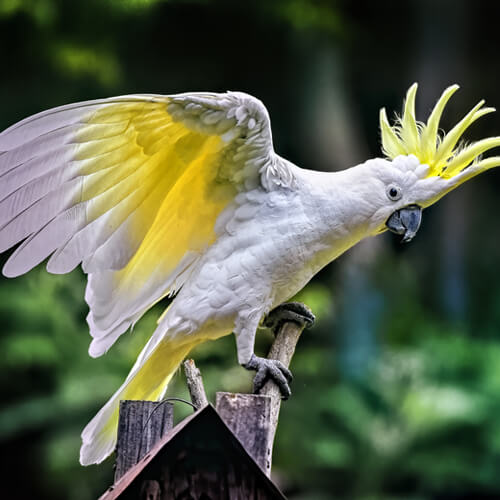
Cockatoo
Mostly found in Australia and the surrounding islands, the Cockatoos are extremely popular as pets. The Cockatoo's intelligent, inquisitive and playful nature and their ability to talk and mimic human speech, makes them enchanting and charming companions.
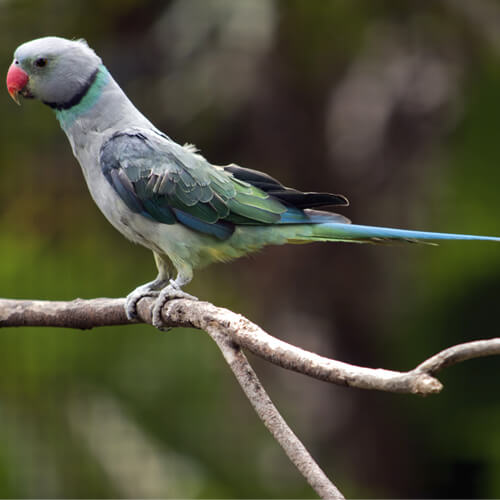
Parakeet
Inhabitants of central Australia, the Parakeets are friendly birds with outgoing personalities. Colorful in pastel shades, graceful and full of energy, these birds are favored as pets all over the world.
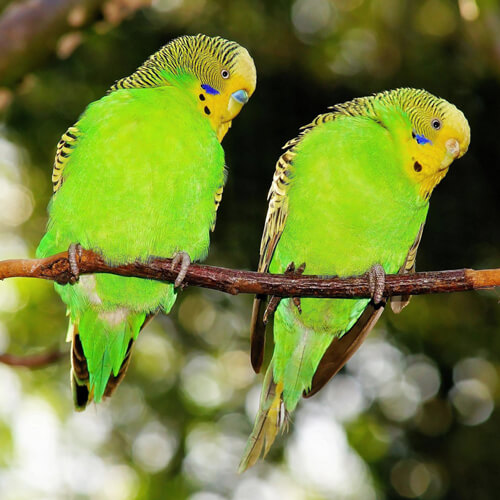
Budgie
Of docile and friendly natures, the Budgies are sweet and coveted as pets by bird lovers. Inhabitants of Australia, these birds come in typical color combinations of green and black.
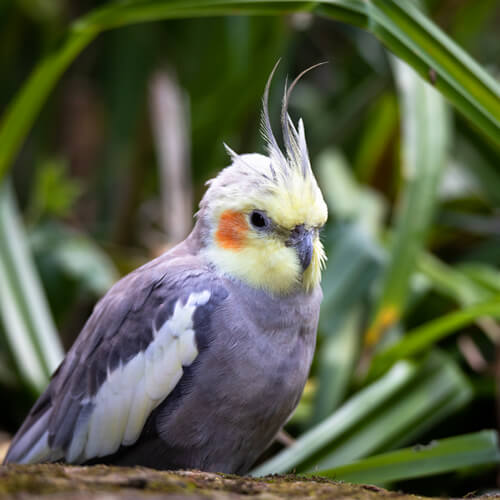
Cockatiel
Mostly found in Australia, the Cockatiels are small birds with a varied color patterns. Easy to tame and capable of speech, these birds make great pet companions.
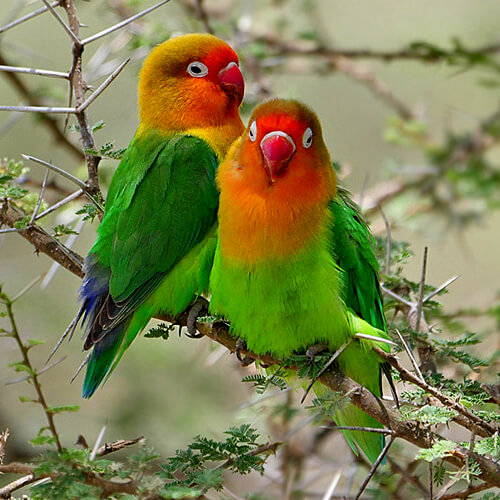
Lovebird
The smallest member of the Psittacine family members, Lovebirds... are playful, active and happy birds who are famous for their endless clownish antics. Available in colorful shades, these birds are native to Africa and surrounding its islands.
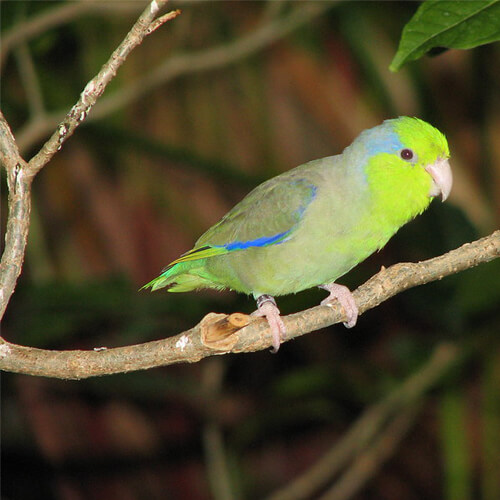
Parrotlet
Inhabitants of western Equador and north-western Peru, the Parrotlets are cute little birds who have limited talking abilities. Often fearless and mischievous, these birds are perfect for small houses and apartment owners.
Parrot Training
Remember that Parrot training should benefit both your Parrot and you. If you don’t want to own a glum-faced, gloomy-eyed weak and silent Parrot, or a screaming, biting, grumpy and aggressive pet Parrot…
Subscribe to The FREE Parrot Training Course, NOW and know the secrets to having a healthy, well-behaved, docile & happy Parrot at home.
The secret behind a successful Parrot training session is “your patience”. Never rush your bird through practice sessions. Remember your schooldays? The ongoing and tiring periods, one after the other? Your Parrot too feels the same way. Allow little breaks between each session.
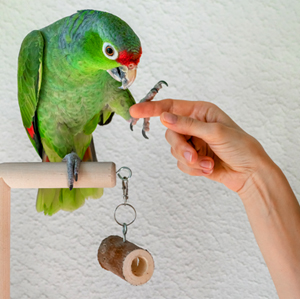
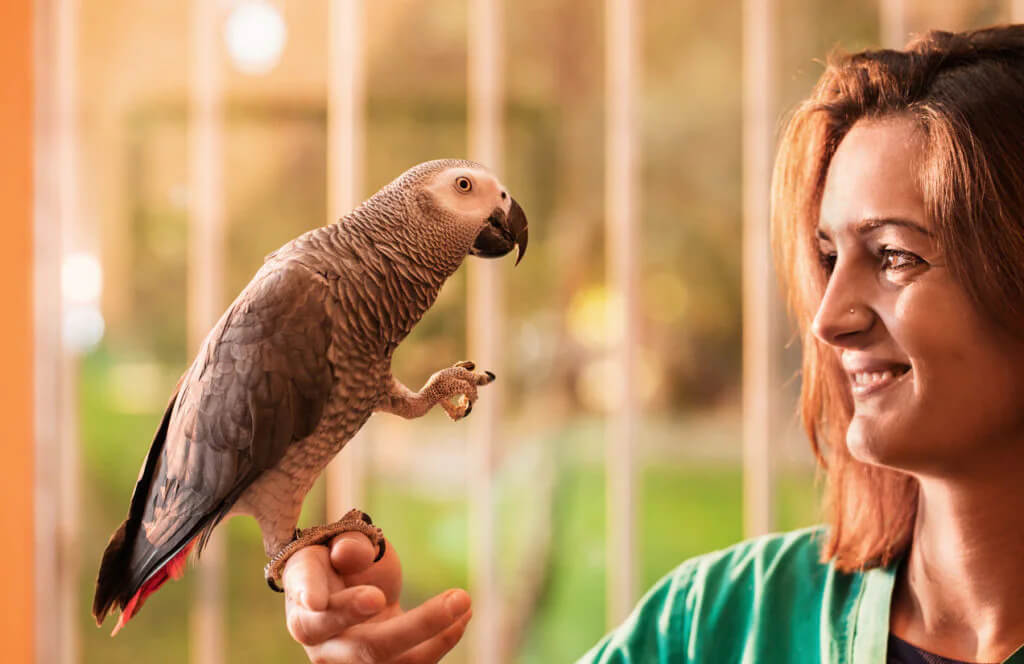
Proper breaks between training negate chances of boredom and irritation in your Parrot, which could otherwise trigger negative behavior in your bird. The first few days, you might feel extremely frustrated that your pet is taking so long to learn a simple ‘step-up’. However, after a considerable amount of time spent with your beloved bird, you’ll learn that giving it adequate time for each training session produces the best results.
It is important to make the training experience pleasurable and delightful for yourself and your bird, so that at the end of the training, you own a happy, playful companion that can give you hours of fun.
Click here to know the secrets to own a well-behaved, docile & healthy Parrot.
Parrot Talking
Parrots are vocal birds. Parrots possess several qualities that endears them as pets to humans, but their most fascinating feature is their ability to mimic human speech and even animal sounds!
Parrots mimic human voices because they enjoy communicating with their social group. Pet birds consider people part of their flock. Even birds that are not tame have the ability to mimic sounds and talk.
Parrots are most vocal in the morning and evenings. In nature, Parrots would normally disburse in the morning to feed and flock to their nests in the evening. It is futile attempt to keep parrots quiet at these times – just get used to the noise. These are also the times of day that parrots learn to talk the best.
Some Parrot species talk more than other Parrot species. If you have set your heart to own a talking bird, choose one accordingly. Consider an Amazon Parrot, referred to as the ‘king of talkers’ among Parrots.
Most Parrots begin repeating words and phrases they hear their owners say frequently, such as “hello” or “come here.” Click Here to learn more about Parrot Talking.
Parrot Diet & Health
Once, it was believed that a Parrot ate and lived only on seeds. Today we know that nothing could be further from truth. Our winged friends need much more than just seeds to sustain. A healthy Parrot diet should consist of all the basic nutrients, vitamins and minerals needed to keep your parrot healthy.
If you are feeding your friend only seeds then it is time to change that. Of course your bird loves it but it’s really not healthy. Seeds contain too much fat and that’s not good for your parrot. A perfect diet should be one of fresh vegetables, pellets, fruits and a little amount of seeds.
Also add vitamin and mineral supplements to your Parrot’s diet. You can either mix them with your parrot’s food or mix them in the water. Know more about Parrot Diet.
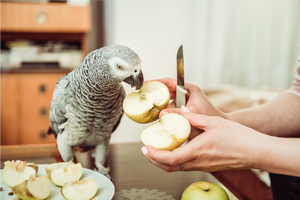
To keep your winged-friend healthy, keep your bird’s cage and its surrounding areas clean all the time. An unclean environment is a perfect breeding place for all sorts of germs that can make your parrot ill. If you notice any signs of illness in your bird, take your Parrot to its vet immediately.
The food leftovers and unwashed containers are some of the sources of diseases. Replace your bird’s water dish with fresh water at regular intervals. Your parrot may regularly poop on its perches. So, these are a few more areas that should be cleaned thoroughly. Exercise your bird regularly to avoid boredom.
Remember that birds are very sensitive to the environment they live in. Want to get detailed information on Parrot diet & health? Would you like to know what is best for your bird’s health and what is not? Subscribe to The FREE Parrot Training Course
Parrot Biting & Bad Behavior
Parrots make great pets. They are intelligent, playful and social birds. Rearing Parrots in captivity, however, can give rise to several behavioral problems in your bird.
Parrots are almost like human babies. Human babies throw tantrums, scream, cry, or howl – this is their way of misbehaving. We all know how difficult it is to deal with the Terrible Twos… and it is a common saying that Parrots remain like a two year old for their entire lives.
Parrots can be mean at times. They can also be moody and temperamental. You need to understand these behavioral phases and act accordingly. Behavioral problems will include biting, screaming, throwing tantrums, not listening to you, and so on.
A good Parrot owner is one who can interpret his bird’s behavioral instincts and natural habits and understanding this should be your top priority. This way you can avoid the recurrence of behavioral problems. Learn more about Parrot biting & screaming from the Subscribe to The FREE Parrot Training Course,
Subscribe Now!
When you subscribe to our email course on , you will discover the natural instincts of your and learn about training, diet and care – FREE!!
This Free-to-your-Inbox course teaches you:
- Very Effective and foolproof methods to stop your from biting...
- Step-by-step on how to tame & train your into a well-behaved, docile bird...
- How to make your wave at you or say hello when you come home from work...
- How to combat your 's window splitting screams and save you ears...
- How you can improve your 's health with a balanced and nutritious diet